· 4 min read
What Your Church's Giving Data Actually Reveals About Spiritual Health
Giving data is one of the most honest behavioral records a church has. Read correctly, a giving report tells you who is leaning in, who is drifting, and who is quietly about to leave—often six to nine months before anyone notices on a Sunday.
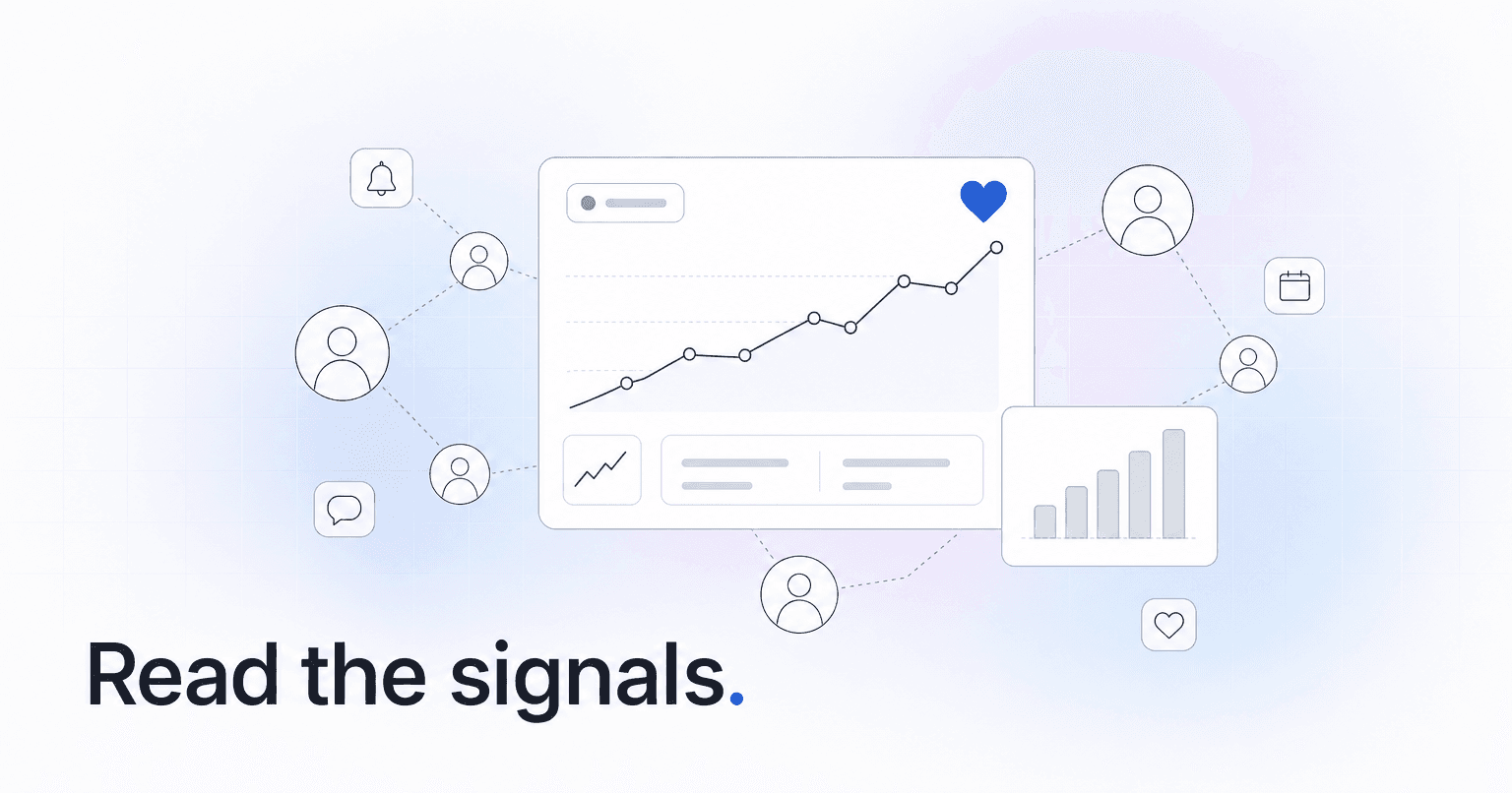
Giving data is one of the most honest behavioral records a church has. It is not what people say in a small group or write on a connection card; it is what they chose to do with their money, week after week, for years. Read correctly, a giving report tells you who is leaning in, who is drifting, and who is quietly about to leave, often six to nine months before anyone notices on a Sunday. Read incorrectly, it becomes a spreadsheet you dread on the first Monday of the month.
Here is how to interpret the signals your giving data is already sending.
Frequency matters more than amount
The single most predictive signal in a giving record is not the size of the gift. It is the rhythm. A member who gives $40 every Sunday for two years is spiritually engaged in a way that a member who gave one $2,000 gift in January is not, even though the annual totals are close.
When frequency breaks, pay attention. A weekly giver who moves to monthly has not necessarily disengaged (many people just switched to a recurring ACH gift, and that is actually a commitment upgrade). But a weekly giver who moves to sporadic, one gift in March, nothing in April, one in June, is almost always telling you something. Life shifted. Attendance is about to shift too, if it has not already.
The signal to watch: a change in the interval between gifts, not a change in the dollar amount.
The "quiet drop" is the loudest signal you have
Members rarely announce that they are leaving. They fade. And the fade almost always shows up in giving first, because giving is a decision people make privately, without the social pressure of a Sunday morning.
A long-tenured giver who suddenly stops for four to six weeks, with no seasonal explanation, is the highest-priority pastoral care conversation on your list that week. Not because you want their money back, but because something has happened in their life or in their relationship with the church, and you have a narrow window to reach out before the decision hardens.
This is the exact pattern ChurchAI was built to flag automatically. Instead of a pastor scrolling through a giving report hoping to spot the gap, the platform surfaces the disengagement pattern the same week it emerges.
First-time givers are your leadership pipeline
A first gift, of any size, is a spiritual milestone. It is the moment a person moved from consumer to participant. In our experience working with churches, first-time givers are dramatically more likely to volunteer, join a group, and stay long-term than attenders who never give.
Read your first-gift list every month. Not to thank people for the money (that framing misses the point), but to identify who just crossed a threshold of ownership. These are your next serving team leads, your next small group hosts, your next elders in a decade. Treat the list that way.
Giving increases signal something too
An unprompted increase, a member who moves from $50 to $150 a week without a capital campaign push, is almost always downstream of a spiritual event. A baptism. A marriage restored. A prayer answered. A sermon that landed hard.
You will rarely know which event caused it. But you should know the increase happened, and the person deserves a personal note, not because you are cultivating a major donor, but because they are telling you, in the most concrete way available to them, that something is happening in their faith.
What giving data cannot tell you
Giving is a signal, not a verdict. A member giving nothing may be in crushing debt, may give generously to a parachurch ministry, or may be in a season of legitimate financial strain. A member giving heavily may be performing. Never confuse the ledger for the soul.
Use giving patterns to prompt conversations, not to grade people. The point of reading the data is to know who to call, not who to judge.
Turning signals into pastoral action
The gap in most churches is not data. It is time. Staff know these patterns matter. They cannot manually track 400 or 4,000 giving records against attendance, group participation, and life events every week.
That is the specific problem worth solving. Connect the financial signals to the engagement signals, automate the flagging, and put a real name in front of a pastor on Monday morning while there is still time to reach out. If you want to see what that looks like for your church, visit ChurchAI or reach out through support.
The data has been telling you the story all along. The work is learning to hear it.
Common questions
- What is ChurchAI?
- ChurchAI is an AI-native church management platform built to help churches retain members, grow giving, and eliminate administrative busywork. Unlike legacy church software that stores data passively, ChurchAI acts as an intelligence layer that connects to your existing tools, analyzes engagement patterns, predicts churn, identifies emerging donors and volunteer leaders, and automates follow-up workflows.
- How is ChurchAI different from Planning Center or other church management software?
- Most church management software like Planning Center, Rock CHMS, or Subsplash are built for administration and reporting. They store data but don't act on it. ChurchAI is built for discipleship and growth. It uses AI to proactively surface insights, predict which members are at risk of leaving, identify first-time and emerging givers, recommend volunteer candidates, and trigger automated follow-up communications. ChurchAI integrates with your existing tools and serves as the command center that turns church data into action.
- Does ChurchAI replace my current church software?
- No. ChurchAI connects directly with your existing church tools including Planning Center, Rock CHMS, Subsplash, Mailchimp, Microsoft Fabric, Power BI, and others. It acts as the intelligence layer on top of your current tech stack, unifying data from scattered systems into one command center without requiring you to switch platforms.
- What problems does ChurchAI solve for churches?
- ChurchAI solves three core problems: (1) Member churn — it identifies disengaged members early through attendance and engagement pattern analysis, then triggers automated follow-up before people fall through the cracks. (2) Missed growth opportunities — it surfaces emerging donors, first-time givers, and potential volunteer leaders that pastors would otherwise miss. (3) Administrative overload — it automates follow-ups, people management, growth tracks, and reporting so church staff can focus on ministry instead of spreadsheets.
- What size churches does ChurchAI work for?
- ChurchAI works for churches of all sizes, from growing congregations to enterprise-level megachurches with multiple campuses and complex tech stacks. The platform scales to handle multi-campus operations with thousands of members, multiple data systems, and sophisticated reporting needs.
- Is ChurchAI an AI chatbot for churches?
- No. ChurchAI is not a chatbot or a simple Q&A tool. It is a full AI-native platform with intelligent agents that analyze church data, score member engagement, predict behavior patterns, automate workflows, and deliver actionable insights. Think of it as an AI-powered Executive Pastor that monitors church health 24/7 and proactively surfaces what needs attention.
- What AI technology does ChurchAI use?
- ChurchAI uses AI-native architecture including large language models, engagement scoring models, predictive analytics for churn and giving patterns, and automated workflow agents. The platform's domain expertise is encoded directly into its AI workflows, prompts, and scoring models, built by founders with over a decade of church leadership experience. This creates a data flywheel where the more churches use ChurchAI, the smarter its predictions and recommendations become.
- How do I get started with ChurchAI?
- Visit churchai.com to request a demo. The ChurchAI team will walk you through the platform, understand your current tech stack and church needs, and show how ChurchAI integrates with your existing tools to deliver immediate value.