· 6 min read
How to Actually Track Prayer Requests: The Intake-to-Closure Lifecycle Most Churches Are Missing
A prayer request only gets followed up when five things exist: a structured intake, a sensitivity tier, one named owner, a follow-up date, and a defined closure state. Most churches capture the words and none of the other four.
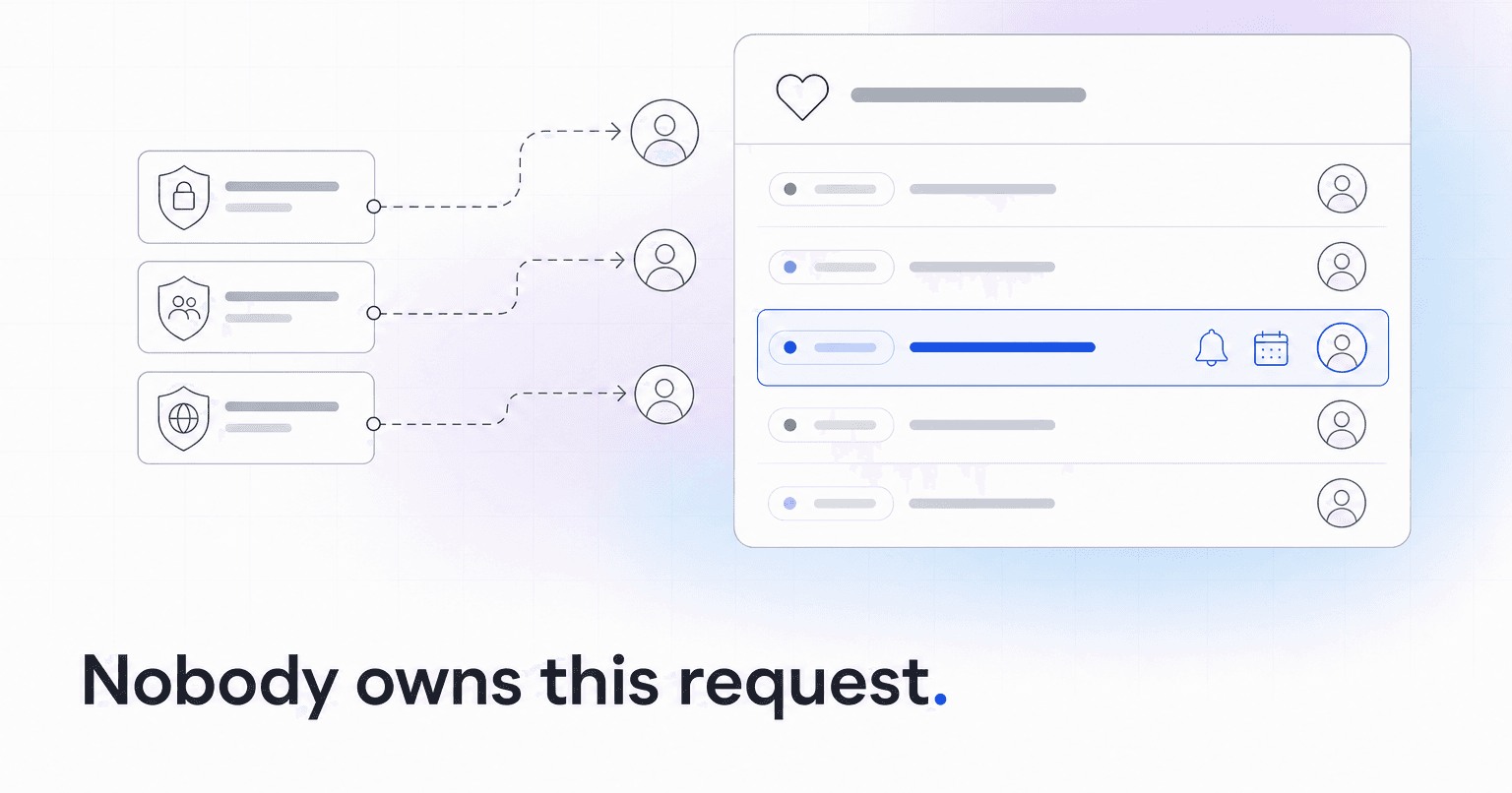
Yes, there are apps for this. Planning Center People will do it with workflows and person notes, Breeze lets you log notes and follow-ups against a profile, there are standalone prayer-wall tools that collect requests and broadcast them, and ChurchAI ties each request to the same member record it uses for engagement and giving. But buying one of those tools rarely fixes the pile-up, because the pile-up is not a storage problem. It is a missing data model. A prayer request only gets followed up when five things exist: a structured intake, a sensitivity tier, one named owner, a follow-up date, and a defined closure state. Most churches capture the words and none of the other four.
That is why a church can move from a shoebox of index cards to a paid care workflow and still be sitting on hundreds of untouched requests come November.
What a prayer request actually is as a data object
Treat a request as a small work item attached to a person, not as a message. It needs these fields:
- Subject and requester: who asked, and who the prayer is for. These are often different people, and the difference matters. "Pray for my brother's surgery" is a care touchpoint for the requester, not the brother.
- Sensitivity tier: how widely this can circulate. More on this below, because it is the field almost nobody has.
- Owner: exactly one staff or lay leader name. Not "the care team."
- Next touch date: a real date, not "soon."
- Status: open, in progress, waiting on the member, or closed with a reason.
Once a request has those five fields, tracking it is mechanical. Without them, no software can help, because there is nothing to query. You cannot build a Tuesday call list out of free text.
Why requests pile up regardless of which app you buy
Four failure points, in the order they usually happen.
Intake is unstructured. Requests arrive on paper cards, in the Sunday text line, verbally after service, in email to the pastor, and in a small group chat. Five channels, no shared format. Whoever transcribes them loses half the context, and the ones spoken in the lobby never get written down at all.
Ownership is collective. A request assigned to "the care team" is assigned to no one. The predictable outcome is that three people assume someone else called, and nobody did. Single ownership with visible reassignment is the fix, and it is not a technology feature so much as a policy your software enforces.
There is no follow-up date, so there is no list. A request without a next-touch date can never appear on a report. It exists, but it is invisible. This is the single most common reason a church has a full prayer database and an empty follow-up workflow.
Nothing ever closes. Without a closure state, the active list only grows, and once it passes roughly 80 items your team stops reading it. Requests need to close explicitly: prayed and resolved, ongoing chronic need moved to a longer cadence, member declined further contact, or unable to reach after three attempts. "Closed" is not spiritual abandonment. It is how the open list stays credible.
Confidentiality tiers, and why one pile is unsafe
Prayer requests are the most sensitive data a church holds, and they usually get the least protection. A workable model is three tiers.
Tier 1, congregational: shareable in the bulletin or from the platform. Surgery dates, new babies, travel, job searches, with explicit permission from the requester.
Tier 2, care team: visible to a defined group of trained leaders. Job loss, a difficult diagnosis, family conflict.
Tier 3, pastoral only: visible to named clergy, logged with restricted access and a short retention window. Addiction, abuse disclosures, suicidal ideation, marital crisis, anything involving a minor.
The tier has to be set at intake and drive access technically, not by honor system. If your prayer notes sit in a general notes field any volunteer with database access can read, you have a real exposure, and increasingly a legal one. Our breakdown of what church member data privacy actually requires covers the lawful basis, retention, and access policy side of this in detail. Tier 3 disclosures also need an escalation path that bypasses the queue entirely: mandatory reporting and safety concerns are not follow-up tasks.
Routing logic that gets a request to the right human
Routing is a set of rules, not a judgment call made weekly. Practical defaults:
- Tier 3 routes to a named pastor within 24 hours, with no queue and no automated messaging.
- Health and bereavement route to whoever does hospital and funeral care, with a next touch inside 48 hours.
- Financial or employment needs route to the deacon fund or benevolence lead.
- First-time guests and members with no group affiliation route to a staff member, not a lay volunteer, because there is no existing relationship to lean on.
- Everything else routes to the small group leader if one exists, and to the care coordinator if not.
Add a load cap. If one lay leader is carrying more than eight open requests, the next one routes elsewhere. Ignoring capacity is how churches burn out their best volunteers, the same pattern that shows up in volunteer engagement tracking.
The follow-up cadence that actually closes the loop
A rhythm that holds up in a 150 to 900 person church:
- Acknowledge within 24 hours. One sentence, human, naming the specific request. This alone changes how members experience the church.
- First substantive touch inside 72 hours, by the owner, by phone or in person for Tier 2 and 3.
- Second touch at 2 to 3 weeks. This is the one everybody skips, and it is the one members remember, because it proves the first was not a formality.
- Review and close at 30 days, or reset the cadence for chronic needs to monthly or quarterly.
The report your team needs on Monday is not the full request list. It is three numbers: requests with no owner, requests past their next-touch date, and Tier 3 items open more than 48 hours. If those three are near zero, the system is working.
Where software earns its keep
The useful function of an app here is not storage, it is enforcing the fields and generating the overdue list. Look for tooling that requires a tier and an owner at intake, links each request to the member record so care history sits beside attendance and giving, drafts the acknowledgment for a human to edit rather than sending it automatically, and surfaces stalled items without anyone running a query.
That last piece is where ChurchAI fits: prayer and care requests attach to the same member profile that drives disengagement scoring, so a member with two open care requests and three missed Sundays reads as one signal instead of two disconnected ones. The follow-up drafts are generated, the routing runs on your rules, and the overdue list arrives without a staff member building it. If your current setup already captures requests but nothing moves, the gap is almost never the software's storage. Start by adding the owner and next-touch date to every open item this week, then decide what tooling you need to keep it that way.
Common questions
- Why do prayer requests pile up even when a church uses dedicated software?
- The pile-up is a missing data model, not a storage problem. Requests stall because they lack a sensitivity tier, a single named owner, a next-touch date, and a defined closure state. Software can enforce those fields and surface overdue items, but it cannot invent them. Without those five fields, no tool can generate an actionable follow-up list.
- What is a confidentiality tier for prayer requests, and why does it matter?
- A confidentiality tier restricts who can see a request. Tier 1 is congregational — shareable in the bulletin with permission. Tier 2 is care-team only — job loss, diagnosis, family conflict. Tier 3 is pastoral only — addiction, abuse disclosures, marital crisis, anything involving a minor. The tier must be set at intake and enforced technically, not by honor system, because prayer notes in a general notes field can be read by any volunteer with database access.
- How does ChurchAI handle prayer and care request tracking?
- ChurchAI attaches prayer and care requests to the same member profile that drives disengagement scoring, so a member with two open care requests and three missed Sundays reads as one signal rather than two disconnected ones. Follow-up drafts are generated for a human to edit, routing runs on your rules, and the overdue list arrives without a staff member building a query. The focus is enforcing the five required fields at intake and surfacing stalled items automatically.