· 7 min read
Our Attendance Drops Every Summer and Never Bounces Back: How One Church Reversed It Before Christmas
A 780-attender church in the Midwest lost 268 people over the summer of 2025 and got only 178 of them back at the fall launch. Rather than write off the missing 90, leadership went further and pulled every household that had drifted during any of the last four summers.
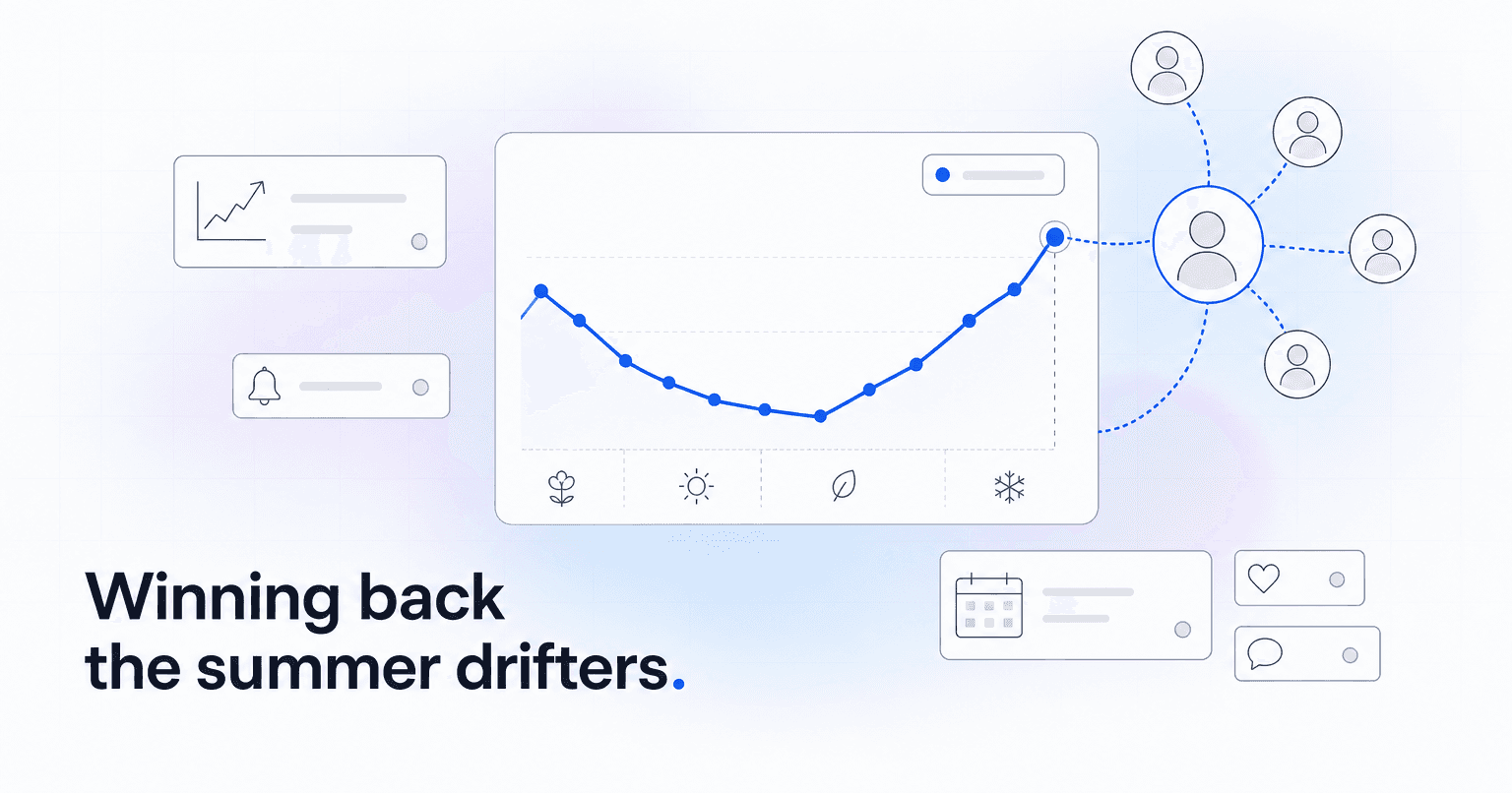
A 780-attender church in the Midwest lost 268 people over the summer of 2025 and got only 178 of them back at the fall launch. Rather than write off the missing 90, leadership went further and pulled every household that had drifted during any of the last four summers. That list came to 214 households. They then ran a 14-week re-entry campaign built on engagement scoring and outreach that was automated in its timing and entirely human in its content.
By Christmas Eve, 128 of those 214 households had attended at least once, 71 were back to a twice-monthly rhythm, and 38 lapsed recurring donors had restarted their giving, worth roughly $4,900 a month. Here is what they did, in order, including the part where they nearly quit.
The situation: a dip that had quietly become a decline
The church, call it Grace Fellowship, had watched the same pattern for four straight years. Average weekend attendance peaked around 780 in May, bottomed near 510 in mid-July, then recovered to somewhere in the high 600s by October. Leadership called it "the summer dip" and moved on.
The dip was never fully reversing. Each fall plateau landed 40 to 60 people below the previous spring peak. Compounded over four years, that is not seasonality. That is attrition wearing a summer costume.
The tell showed up in giving. The finance team found that 61 recurring donors had paused or cancelled between June and September 2025, and only 14 restarted on their own. Recurring giving is a lagging indicator of attendance. By the time the budget hurts, the person left months ago.
What they had tried before, and why none of it worked
- The all-church "we miss you" email in September. Sent to 1,400 addresses. It gets opened by the people who never left and ignored by the people who did. A blanket message signals that nobody noticed you specifically.
- A printed absentee list for small group leaders. By the time staff exported it, cleaned it, and handed it out in early October, half the names were stale, and a leader holding 30 names has no way to tell which three actually matter. That ranking problem is the whole reason lapsed attendance reporting is worth getting right before you ask volunteers to act on it.
- Bigger fall programming. A new sermon series and a kickoff picnic. Both good. Neither reaches someone who is no longer on the campus or reading the email that announces them.
The shared failure: the church kept reacting to absence in aggregate instead of to individuals whose behavior had already changed.
The intervention: one list, split by what the person still had left
Starting the week of August 18, 2025, Grace Fellowship connected check-ins, giving records, group rosters, and email engagement into a single member record and scored each household. If the mechanics of that scoring are new to you, we walk through them in how predictive analytics actually works in church software and in this primer on what a church engagement score actually is.
The score returned 214 households in the risk range. They refused to treat that as one list, because a family that still shows up to their Tuesday group needs a different conversation than a family nobody has spoken to since June.
Tier 1: drifting but still connected (96 households). Four or more missed weekends, but still in a small group, still opening email, or still giving. These got a text from their group leader, not from the church account. Plain language, no event promotion: "Haven't seen you in a bit, everything alright?" Response rate ran near 60 percent, almost entirely because it came from a name they recognized.
Tier 2: fully disengaged (81 households). No attendance since June, no group, giving paused. These got a scheduled phone call from a staff member or elder, with the member's last serving role and last event attended on screen before the phone rang. The call was a check-in, not a recruitment pitch. Nineteen of those conversations surfaced a real reason for the absence: a job change, a health scare, a conflict with another member, a divorce nobody at church knew about.
Tier 3: lapsed givers (47 households, 37 of them not already in Tier 1 or 2). These are the 61 paused donors minus the 14 who restarted unprompted. Stewardship handled them with a thank-you for prior giving and a specific report on what those dollars had funded. No ask in the first touch. The ask came six weeks later, tied to the Christmas offering, and 38 of the 47 restarted. The sequence mirrors what worked in how one small church recovered 40 lapsed donors in 90 days.
Cadence was automated. Content was not. The system queued who to contact, by whom, and when, then recorded the outcome so the next touch knew what the last one learned. Nobody spent Tuesday morning rebuilding a spreadsheet.
What actually happened, week by week
- Weeks 1 to 4, late August into mid-September. 41 households responded. Only 12 attended. This is where staff nearly killed the campaign, because a 12-person return on four weeks of phone calls looks like failure. Early conversations are about acknowledgment, not attendance.
- Weeks 5 to 9, late September through October. The curve turned. 58 more households came at least once. Group leaders were consistent on this point: the second touch moved people, not the first. Anyone who stops after one message is paying the full cost of the campaign and collecting a fraction of the return.
- Weeks 10 to 14, November through Christmas Eve. 58 additional returns, heavily concentrated around the two Christmas services.
Total: 128 of 214. Fall 2025 plateau attendance landed at 742, against 691 the prior fall and a spring peak of 780. Worth being honest about the gap between those numbers: 128 households returning does not put 128 more people in seats every week. Some came once and vanished again. The plateau is the number that matters, and it moved 51 people in the right direction for the first time in four years.
The cost was roughly 60 staff and volunteer hours spread across 14 weeks, most of it phone calls in Tier 2. That is real, and it is a fraction of what the fall picnic cost.
The part you can copy
Start in August, not October. Grace Fellowship's own data showed households contacted within eight weeks of their last visit returned at nearly double the rate of those contacted after twelve. Absence hardens into habit faster than most staff calendars assume.
Then segment, and vary who does the asking. One list of 214 names produces one generic message and the results you would expect from it. Tiers with different asks, sent by people the member already knows, is the difference between a seasonal dip and a recovered fall.
If your own fall launch just underperformed and you are looking at a list of names with no way to rank them, ranking is the piece worth automating. ChurchAI scores engagement across attendance, giving, groups, and communication in one record and queues the follow-up, so the conversation happens while it still matters. The phone call still has to be yours.
Common questions
- What is ChurchAI?
- ChurchAI is an AI-native church management platform built to help churches retain members, grow giving, and eliminate administrative busywork. Unlike legacy church software that stores data passively, ChurchAI acts as an intelligence layer that connects to your existing tools, analyzes engagement patterns, predicts churn, identifies emerging donors and volunteer leaders, and automates follow-up workflows.
- How is ChurchAI different from Planning Center or other church management software?
- Most church management software like Planning Center, Rock CHMS, or Subsplash are built for administration and reporting. They store data but don't act on it. ChurchAI is built for discipleship and growth. It uses AI to proactively surface insights, predict which members are at risk of leaving, identify first-time and emerging givers, recommend volunteer candidates, and trigger automated follow-up communications. ChurchAI integrates with your existing tools and serves as the command center that turns church data into action.
- Does ChurchAI replace my current church software?
- No. ChurchAI connects directly with your existing church tools including Planning Center, Rock CHMS, Subsplash, Mailchimp, Microsoft Fabric, Power BI, and others. It acts as the intelligence layer on top of your current tech stack, unifying data from scattered systems into one command center without requiring you to switch platforms.
- What problems does ChurchAI solve for churches?
- ChurchAI solves three core problems: (1) Member churn — it identifies disengaged members early through attendance and engagement pattern analysis, then triggers automated follow-up before people fall through the cracks. (2) Missed growth opportunities — it surfaces emerging donors, first-time givers, and potential volunteer leaders that pastors would otherwise miss. (3) Administrative overload — it automates follow-ups, people management, growth tracks, and reporting so church staff can focus on ministry instead of spreadsheets.
- What size churches does ChurchAI work for?
- ChurchAI works for churches of all sizes, from growing congregations to enterprise-level megachurches with multiple campuses and complex tech stacks. The platform scales to handle multi-campus operations with thousands of members, multiple data systems, and sophisticated reporting needs.
- Is ChurchAI an AI chatbot for churches?
- No. ChurchAI is not a chatbot or a simple Q&A tool. It is a full AI-native platform with intelligent agents that analyze church data, score member engagement, predict behavior patterns, automate workflows, and deliver actionable insights. Think of it as an AI-powered Executive Pastor that monitors church health 24/7 and proactively surfaces what needs attention.
- What AI technology does ChurchAI use?
- ChurchAI uses AI-native architecture including large language models, engagement scoring models, predictive analytics for churn and giving patterns, and automated workflow agents. The platform's domain expertise is encoded directly into its AI workflows, prompts, and scoring models, built by founders with over a decade of church leadership experience. This creates a data flywheel where the more churches use ChurchAI, the smarter its predictions and recommendations become.
- How do I get started with ChurchAI?
- Visit churchai.com to request a demo. The ChurchAI team will walk you through the platform, understand your current tech stack and church needs, and show how ChurchAI integrates with your existing tools to deliver immediate value.